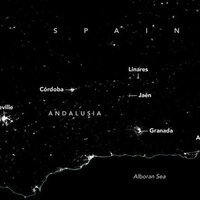


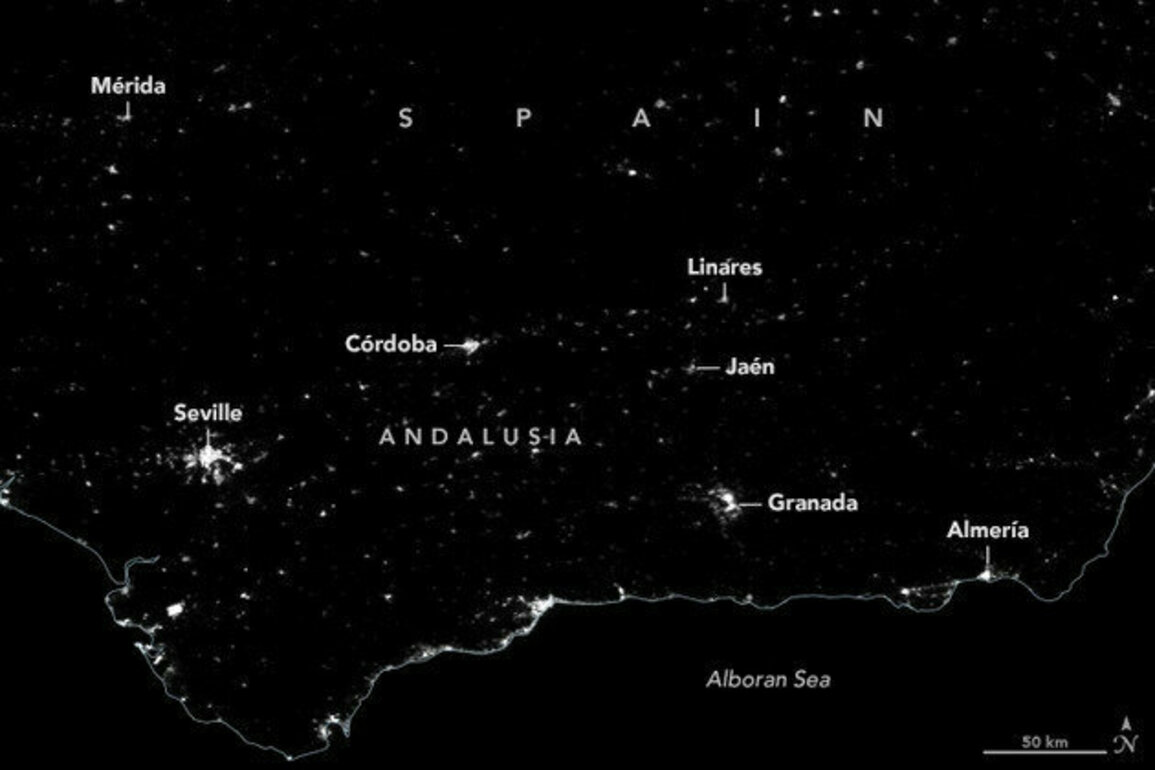
On Monday, April 28, a massive blackout engulfed the entirety of peninsular Spain, Portugal, and parts of Southern France. Nothing workedno cell phones, no trains.
I was in the subway station when everything suddenly went dark.
My first thought: the shit has hit the fan. A nuclear exchange must have taken place somewhere, and weve been affected by an electromagnetic pulse (EMP)not an implausible scenario. A nuclear detonation, beyond the destruction, injuries, and contamination caused by the immense heat, blast wave, and radiation, also generates an EMP capable of frying all electronic devices within its radius. The reach of an EMP can extend far beyond the blast site, depending on the altitude of the detonationthe higher it is, the broader its effect.
Emerging from the darkness of the subway station, I felt a wave of relief upon seeing that cars appeared to be functioningmost modern vehicles would be rendered useless by an EMP. I boarded a bus, noting that its GPS was operationalfurther evidence against a nuclear EMP. Yet, I remained uneasy. A nuclear EMP could still have destabilized the power grid at the country's periphery without directly affecting Madrid. So, while an EMP was becoming less and less likely, it was still not entirely out of the question, especially given the current geopolitical climate.
Passengers on the bus were talking. No one's phone was working, and nobody around us had any news. No one had a radio, but one persons phone had managed to receive a message from a friend minutes after the blackout began: the outage wasnt just nationwideit had also hit France and Portugal, and who knew where else. This was big.
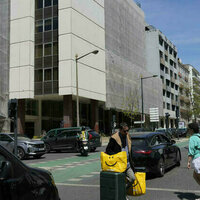
As the bus moved through the streets, crowds continued to swell. Spain boasts an extensive train network, and public transportationespecially the subway systemis affordable and efficient, meaning many people rely on it. Like ants fleeing a disturbed nest, people poured out of subway stations, flooding the streets. The sheer number of people was staggering. Traffic jams were everywhere. Uncertainty reigned
I was anxious but kept to myself. On one hand, I didnt want to be the voice of panic. On the other, amid the chaos, I found myself strangely enjoying the slow bus ride. While people in small towns or cities tend to be friendlier and more outgoing, residents of major cities -like Madrid or Barcelona- often keep to themselves, barely acknowledging others on public transport. But now, people were talking, sharing information, reassuring each other, even cracking jokes. There was a palpable sense that we were all in this together.
I got off the bus several blocks ahead of my stop and started walking. As I made my way home, I was distractedcalculating the little cash I had, mentally taking stock of my food supplies, considering how I would ration them and how long they would last. I still had no idea what was really happening.
Then, I came across a parked truck with its doors wide open, blasting the national radio at full volume. The driver stood beside it, eagerly relaying news to passersby. Finallysome answers. It was a nationwide blackout, originating in Spain, affecting most of Portugal and only parts of southern France. Nobody knew the cause, but power was expected to return in five to ten hours. Authorities advised people to avoid driving and stay putmassive traffic jams were clogging the streets. Airports and hospitals remained operational, and so far, no major tragedies had been reported.
Relief washed over me. No nuclear war, no fallout from a European conflict, andapparentlyno cyberterrorism.
Still, for many, chaos reigned. Hundreds were trapped in subway tunnels and elevatorsthough quickly rescuedwhile around 35,000 passengers were stranded somewhere in Spains vast railway network. The high-speed train, normally capable of whisking travelers across the country in under three hours, had become a nightmare for anyone left marooned in the middle of nowhereor worse, inside a tunnel.
Roads and highways collapsed under the strain. Large supermarkets shut their doors, but some small businessesbazars, bodegasremained open, operating on a cash-only basis. Restaurants adapted, serving drinks and sandwiches to anyone who had money on hand.
Like the truck driver Id encountered, several motorists cranked up their car radios so pedestrians could stay informed. An African harp player, who usually amplified his kora through a boombox, had instead plugged in a radio, wandering the streets with the volume turned up. Ordinary citizens donned yellow vests and took it upon themselves to direct traffic and regulate intersections. Ice cream shops started handing out free ice cream, and some generous passersby offered to cover strangers' drinks. People spoke to each otheron buses, in parks, on terracesoffering reassurance, guiding the elderly to their homes.
Some individuals with limited mobility remained at restaurants or outdoor cafs, waiting out the disruption, reluctant to face the challenge of returning home without the use of elevators. Soon, they were joined by others, and what started as small gatherings evolved into impromptu, festive assemblies. In some plazas, strangers mingled, played games, sang, and danced to whatever music they could improvise.
Yet, for travelers, the situation was far from celebratory. Many walked for hours, dragging heavy luggage, only to end up sleeping on the floor of the main train stations. Even then, people remained patient, talking and sharing whatever food they had. Some nearby businesses opened their doors, offering their spaces as temporary shelters, while first responders distributed blankets and cots. Some residents living near these stations even welcomed strangers into their homes.
Overall, people were considerate and, in many cases, remarkably generous. While Isabel Daz Ayuso, the president of the Community of Madrid, was busy calling for military intervention to control alleged riots and chaos, there were no riotsno looting. Despite the widespread collapse across the country, traffic accidents were rare. In some areas, crime rates even droppedby as much as 70%.[1]
That Monday could easily have been a chapter in Rutger Bregmans Humankind: A Hopeful History, once again contradicting the cynical notion that people are inherently selfish and violent. It refuted what Dutch primatologist Frans de Waal calls veneer theorythe idea that civilization is nothing more than a thin and fragile layer, ready to shatter at any moment, exposing humanitys true nature as brutish and self-serving. The evidence overwhelmingly suggests the opposite: in times of crisis, people demonstrate empathy and compassion.
In her book Life Undercover, Amaryllis Fox recounts witnessing former combatantssworn mortal enemieslaughing and sharing a drink simply because their circumstances had changed. Somehow, they had been able to move beyond their grievances and recognize humanity in each other. She describes this phenomenon as the lifting of a fairytale curse, one that dehumanizes opponents and leads to atrocities. Once that dehumanization is stripped away, people can collaborate. They realize that, at the core, they are not so differentthat, ultimately, they are in the same boat.
And so, in Spain, while politicians were busy pointing fingers, for one day, most people simply didnt care about that. Party politics faded into the background. That day, people understood, perhaps more profoundly than ever, that despite their differences, they were all in this together. More than thatit felt good to be generous, to be kind to one another.
What does this mean for nuclear abolition? Nuclear deterrence relies on the belief that human nature is prone to violencethat people require a massive threat to keep them from fighting. Ursula von der Leyens doctrine of peace through strength operates under this assumption, and hence, nuclear disarmament impossible, despite its risks, because nuclear weapons will always be necessary.
But what if we assume instead that people truly seek peaceeven if they dont always realize it? That humans arent necessarily prone to wars and violence? In that case, nuclear abolition is not only possible; it is a logical path forward.
Si vis pacem, para bellumIf you want peace, prepare for war. This phrase has guided military doctrine for centuries, yet history has repeatedly shown that militarization and mobilization fuel conflict, not peace. If we genuinely desire peace, the correct approach must be Si vis pacem, para pacemIf you want peace, prepare for peace.
Peace is not simply the absence of war, or even the absence of conflict. Rather, peace demands the non-violent resolution of conflict, achieved through tireless diplomatic efforts. It requires building bridges, fostering opportunities for cooperation, and ensuring justice, equality, and the rule of law.
Simply put, peace is an ongoing effort to lift the curse of "othering."
So, as we roll up our sleeves and take on the challenge ahead, let us approach nuclear abolition with kindness and understanding. Let us dedicate ourselves to opening minds, challenging entrenched narratives of nuclearism, and breaking free of the dehumanization trapeven in our own thinking.
May our work toward a nuclear-weapons-free world be rooted in hope and a deep faith in humanity. Peace is possible. It may be closer than we think.
[1]According to police reports, crime rates decreased on Monday, April 28 by over 30% in Andalusia, 70% in Madrid and 80% in Valencia.https://www.levante-emv.com/comunitat-valenciana/2025/04/29/fuerte-despliegue-policial-durante-apagon-116876654.html
Carlos Umaa